
Between Calls Issue #5
AI use modes, a spoof URL that nearly cost us, the 2026 Work Trend Index, and lessons from 5 cities of voice agent workshops

What caught my eye
AI use modes — delegation vs collaboration
I was watching a YouTube video this week about how people use AI. There was a creator named Kyle Vamvouris, and he made a point that has stuck with me: people who use AI in a very specific way tend to get the “experience of competence” before they actually evaluate or judge the work.
I’ve been thinking about that because I’ve seen a lot of variance in how people post on LinkedIn or share documents internally within their organizations. It really does feel like people are using AI differently at this point.
An example I’ll give you is that I started writing Substack articles because I wanted to force myself to think through concepts, ideas, and things happening in the space around me. That has helped me become more of a collaborator with AI, and it keeps me connected to the logic being built out.
What I often see is people acting like delegators with the AI tools they’re using, and that can create a disconnect from the content they’re putting out.
Microsoft recently released a Work Trend Index where they identified different modes of how people use AI:
Delegation
Collaboration
Asking
Exploration
I think delegation is the highest risk mode, and I see collaboration as one of the lowest risk modes. Of course, exploration is low risk too.
If you’re part of an organization that is pushing you to use AI, or if you’re using it in your personal life, one thing I would caution you on is this: we’re all going to delegate some of our tasks. That’s fine. But don’t delegate the most thoughtful parts of the work.
Make sure you’re staying connected to the work and keeping yourself in the role of a collaborator. If not, it becomes very easy for the content you’re putting out, or the work you’re producing, to be viewed as AI slop and not be taken seriously.
YourTango on AI and the “experience of competence” effect and Microsoft’s Work Trend Index on agents and human agency.
The Bogg Bag URL spoof Shannon almost fell for
Like everyone, my wife does deal shopping for long periods of time. When Shannon wants something she spends a ton of time finding the best deal she can. The other day Bogg Bag had a great deal she wanted to capture for a trip to Disneyland we have coming up. She entered the normal credit card she uses and it just refreshed the page. The same thing happened again, so she tried not 1 but two more cards thinking they didn’t accept Amex, or Capital One when she went to the Visa. She told me after the third try she was worried it was fraud, and sure enough after putting the URL in to Gemini I could see that the URL was Bogbaggs instead of Boggbag — and the website home page was identical, and so were the buy flows.

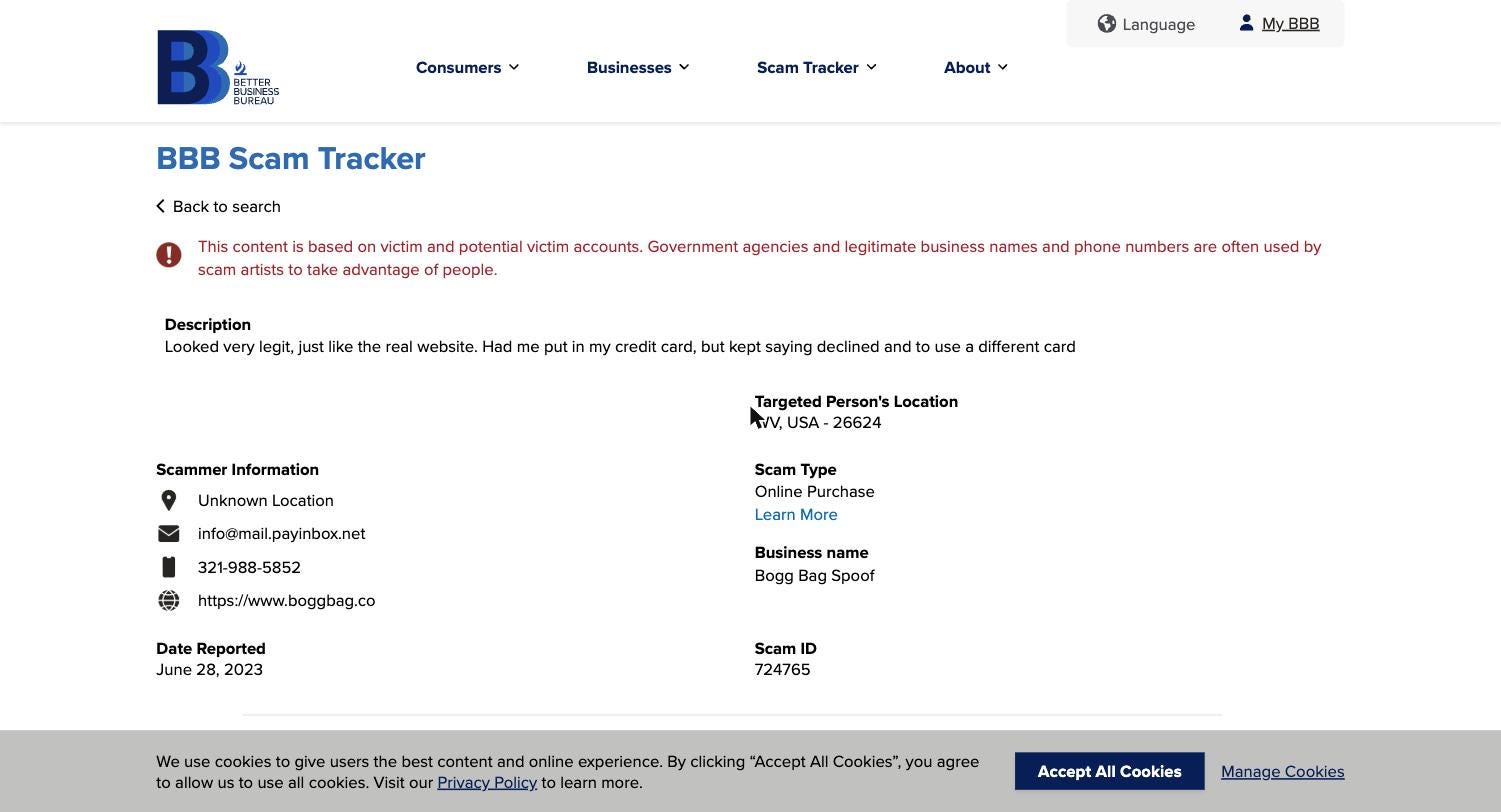
It even let her log in to her account. After freezing these cards and ordering new ones, I was shocked at how easy it must have been for someone to do this with Claude Code, and for someone as careful as Shannon to fall for this, I can only imagine someone paying less attention, or much older, falling for this — especially at scale. There was even a Better Business Bureau link warning of this site after doing investigation. Moral of the story: always check your URLs before putting in payment info.
Bogg Bag’s own warning on Facebook and the BBB Scam Tracker filing on the spoof.
What Microsoft is up to
2026 Work Trend Index: workers are ready, their companies aren’t
This week I spent time reviewing Microsoft’s 2026 Work Trend Index. The biggest takeaway for me: organizational culture drives 2X the AI impact of individual skill. Translation: your best people are already ahead of your systems. A few stats worth sitting with:
49% of AI assistant chats are now cognitive work — analysis, judgment, decisions. Not lookups.
15X year-over-year growth in active agents inside enterprises.
66% of frequent users say they spend more time on high-value work.
Only 26% say leadership is genuinely aligned on AI.
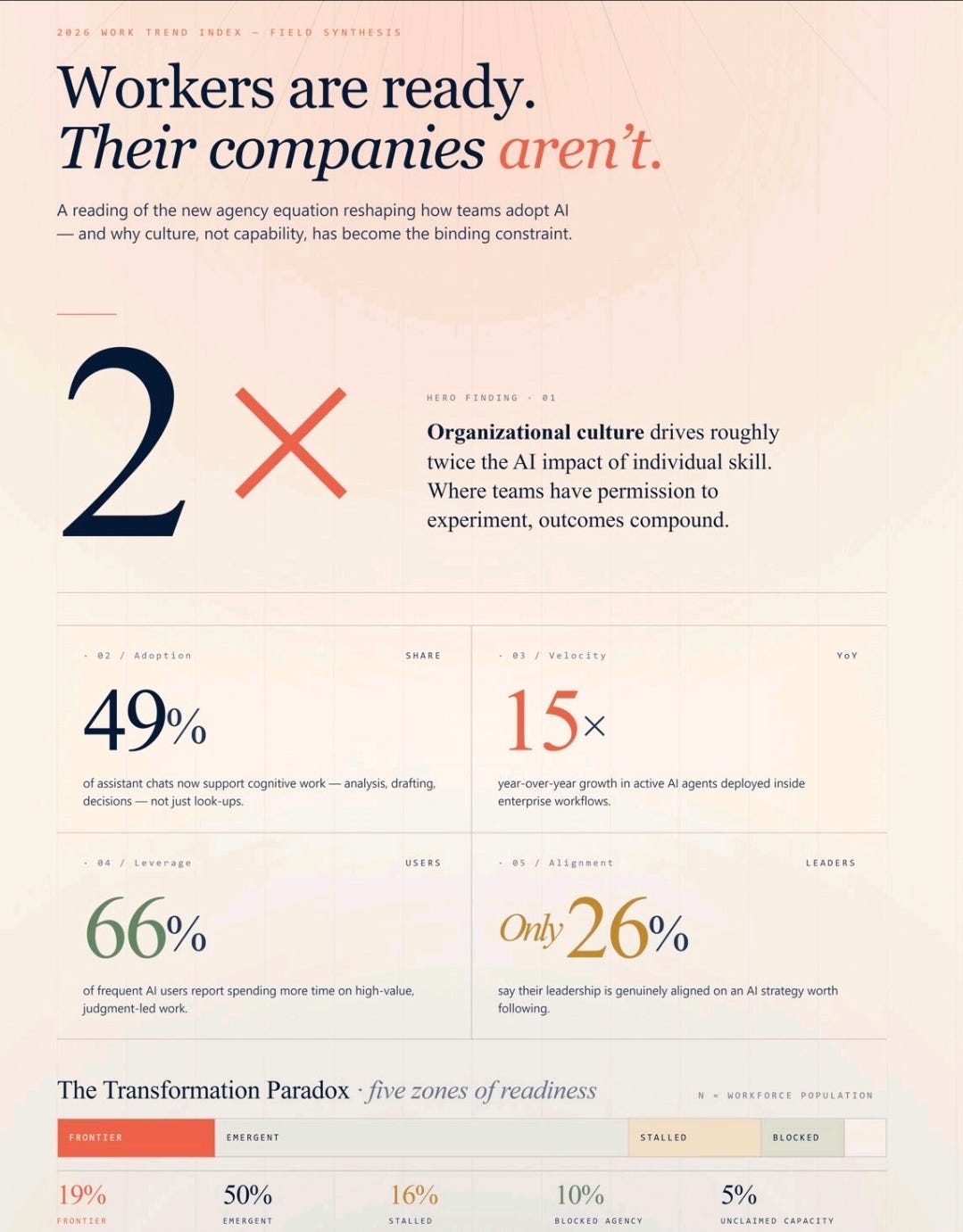
Microsoft’s 2026 Work Trend Index and my LinkedIn breakdown of the readiness map.
Kids and tech
The tablet lesson we’re about to forget
When I saw Eric Schmidt get booed off stage last week at the University of Arizona commencement on Sunday, May 17, I was not surprised. I spend a lot of time with industry leaders talking about AI sentiment, oftentimes it’s positive until it gets negative around job loss. Most importantly, I also spend a lot of time mentoring college-age students. AI sentiment hits differently for them. They are looking at less possibility and no clear on-ramp when it comes to starting a career in the corporate world. Millennials on the other hand are a bit more mixed depending on what type of work they do generally.
The reason I think this is important is what I don’t often hear talked about is kids under 5 today. Common Sense Media’s 2025 census found 40% of 2-year-olds now own their own tablet, and 58% by age 4. I recall the impact that tablets had on kids when they got popularized and we didn’t really know that impact until today, whether it be eye issues, attention span, and speech development. How will children directing AI agents impact their development? Will it expand thought process or will it hurt critical thinking skills? I am not sure but I do think we should ask these questions now, not later, once we see a decline. There should be strong institutional guidance between colleges, grade schools, and other level schools to ensure that students are using AI in the most beneficial way possible for their mental health.
Another interesting question. Will this generation hate AI? Embrace it? How much faster will they adopt it if they start at a young age? What will coding classes look like?
NBC News on the Schmidt commencement booing and Common Sense Media’s 2025 census on kids zero to eight.
Further reading: SiliconAngle’s deeper look at Schmidt’s remarks, NIH on screen time and child development, and the Canadian Pediatric Society on screen time and language delay.
What I’m testing
The Contact Center Roadshow: 5 cities, 200 leaders, 35 voice agents
Last year I had an idea: I wanted to create an in-person event with hands-on content for leaders who want to connect with other leaders in the customer experience or contact center space. I wanted to put this on at Microsoft Innovation Hubs in multiple cities so people didn’t have to travel unless they wanted to. When I had this idea, I shared it with our partner Avanade, who had actually been wanting to do the same thing. Because of this, we decided to build a contact center customer experience roadshow with Avanade, Microsoft, and Executives in the Know as the third partner.
What we put together was a five-city event over six months that brought together over 200 people in person. The agenda was very hands-on — we ran envisioning workshops and a “Build Your Own Voice Agent” session. What it did for me, more than anything, was give me a view of what experienced leaders are actually dealing with day-to-day — not just what I hear on calls.
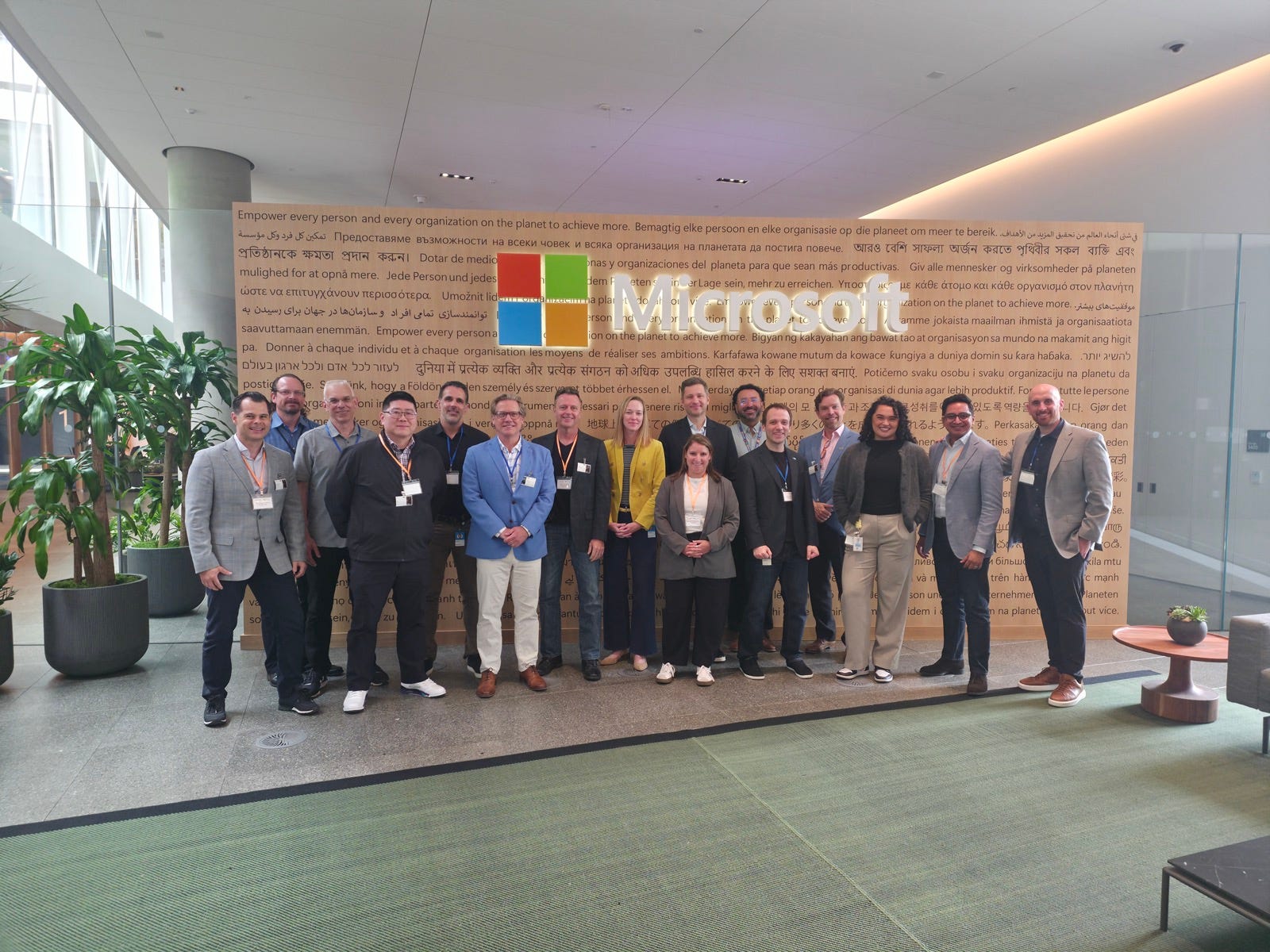
One of the unique things about this is that Executives in the Know is really good at facilitating conversations between like-minded leaders working toward similar goals. Being in a room with 40 people from 30 different organizations, hearing their thoughts and opinions, and hearing how they’re overcoming obstacles and reaching their objectives was huge for us.
What really stuck out to me, looking at the trends across all five cities and 200+ participants, were the top three things I heard:
Getting to data effectively is critical, whether you’re in customer service, sales, or an adjacent industry.
The sentiment around AI is heavily mixed. A lot of organizations have a clear view that AI is the next wave, and their leadership has created a really clear roadmap. Some organizations are kind of the opposite: there’s not a clear roadmap, there’s not a really clear understanding of what’s coming next, and there’s not a clear end state they’re painting for the organization.
Building the right culture. Some organizations are allowing a lot of rapid prototyping and a lot of different tools to be used — those are the organizations that seem to be excelling. The ones that are overly governed and don’t allow people to build these things are where we see a huge slowdown and a lot of constraints.
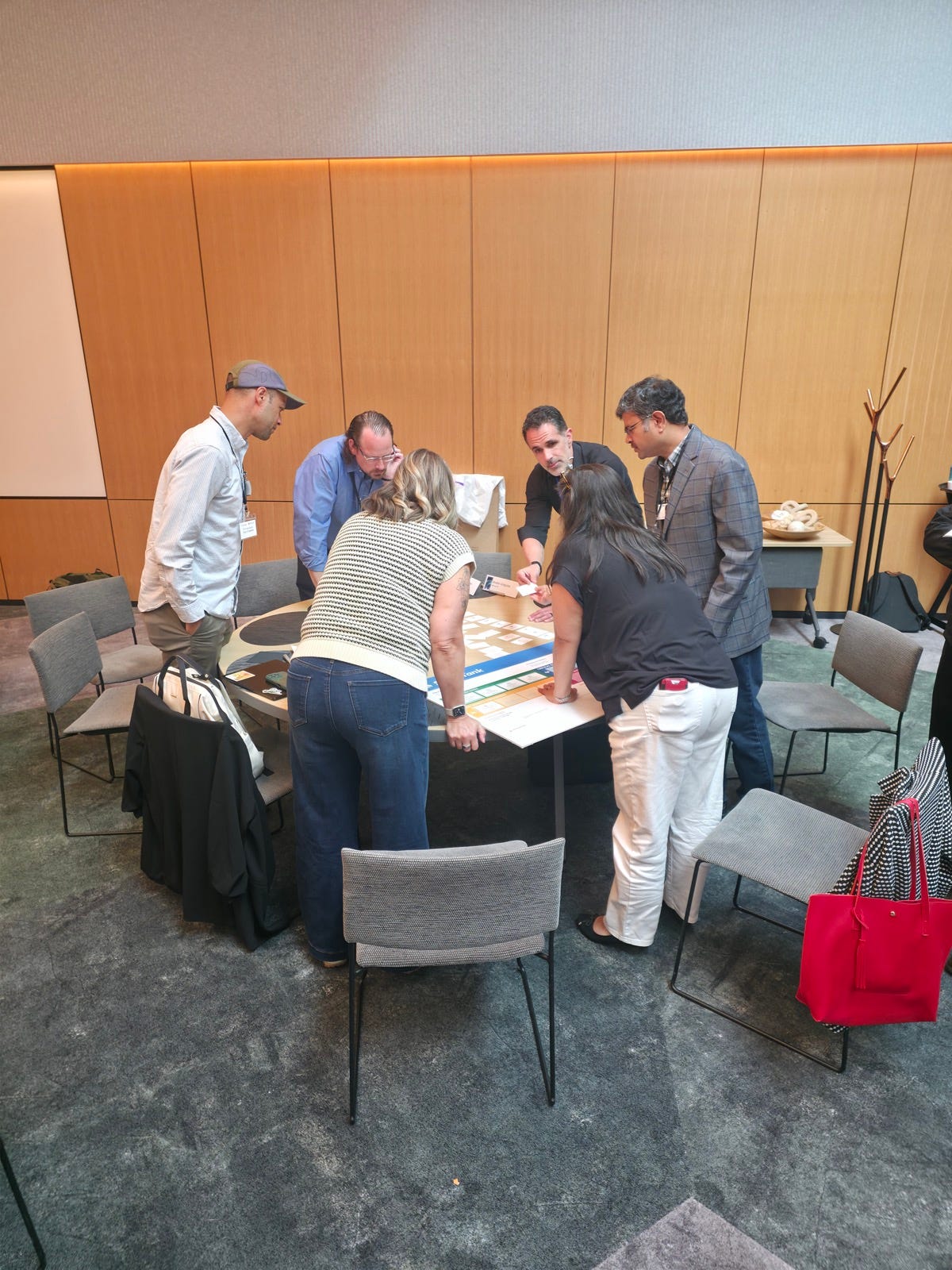
I want to take a moment to say thank you to Avanade, Executives in the Know, and everyone at Microsoft who helped make this event what it was. I really appreciate it. There was a tremendous number of individuals involved, whether it was inviting customers, presenting, or handling logistics. These types of in-person events aren’t easy to do, but I think they’re really rewarding and worth the time. At the end of it, we built 35 voice agents in total. It was fun.
The short list
Vapi hits a $500M valuation after Amazon Ring picks it over 40 rivals. 1B+ calls handled, eight-figure ARR run rate. The voice-agent layer is where money is moving.
NIST CAISI signs frontier-AI national security testing agreements with Microsoft, Google, and xAI. The government model-testing framework is starting to take real shape.
Google catches the first real-world AI-built zero-day in the wild. A live test of where AI-assisted attack tooling is actually heading.
FDA expands AI capabilities with Elsa 4.0 and the HALO platform. 40+ submission systems collapsed onto unified data, agency-wide AI on top.
Stratechery on data center discontent: just pay the communities. A worked example shows ~$10K per resident per year costs about 3.8% of operator revenue.
If this was useful, share it with someone who’d find it worth the read.
Only proofread with AI, never written